

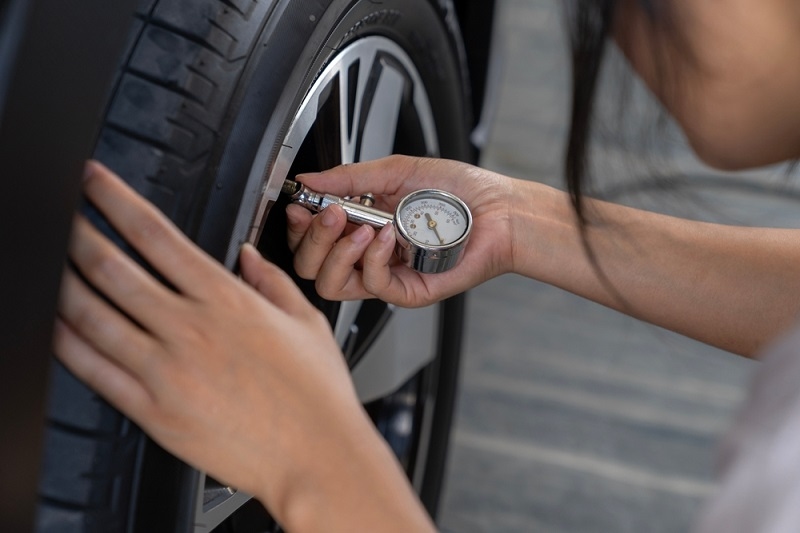
It usually happens the same way. The temperature drops overnight, you start the car in the morning, and suddenly a small warning light appears on the dashboard. Tire pressure.
For many drivers, the first thought is that something must be wrong. Maybe a slow puncture or a damaged tire. But during colder months, the explanation is usually far simpler. Low tire pressure in cold weather is extremely common, and in most cases, it’s simply the result of physics. Therefore, there are several types of tires designed for different weather conditions.
Air behaves differently when temperatures fall. The air inside your tires reacts to the cold, and the pressure drops with it. That change may be small, but it’s enough for modern vehicles to detect and report.
In nature, warm air expands while cold air contracts. It’s a basic principle, and it applies inside your tires just as much as it does anywhere else. When the outside temperature falls, the air molecules inside the tire slow down and take up less space. The pressure inside the tire decreases even though no air has escaped.
This is why drivers often notice pressure warnings during the first real cold spell of the year. The tires were likely inflated correctly weeks earlier, when the weather was warmer. Once winter arrives, the same tires suddenly read a few PSI lower. It doesn’t mean the tire is damaged. It simply means the air inside it has responded to colder temperatures.
A small pressure drop, a few PSI, does not seem like a big deal. Tires are made to work well within a certain pressure range. When the pressure is lower than that range, the tire bends more than it should. This extra bending makes the tire use energy to move. Many drivers do not realize how cold weather affects tire pressure and vehicle performance.
Over time, this can make the car use more fuel and cause the tires to wear out unevenly, especially on the edges. The way the car handles can also change a bit. The steering might feel a bit harder to turn. If the tires stay underinflated for a time, it can take longer to stop the car. Most of these changes happen slowly, which is why drivers sometimes do not notice them. Drivers should check their tire pressure regularly to avoid these problems. Tire pressure should be checked at least once a month and before long trips. It is also an idea to check the tire pressure when the tires are cold.
This means the car should not have been driven for at least three hours before checking the pressure. By following these tips, drivers can help ensure their tires are properly inflated. Their car runs smoothly.
Mechanics often talk about the 10-degree rule for tire pressure when it comes to winter car care. This rule is not a calculation, but it helps drivers know what to do. The 10-degree rule is a guideline that gives drivers an idea about tire pressure in winter. The idea is that tire pressure typically drops about one PSI for every 10°F decrease in temperature.
So if the temperature falls by 20°F or 30°F overnight, your tires could easily lose two or three PSI. That’s enough to trigger a tire-pressure monitoring alert in many vehicles.
The rule helps explain why pressure readings change so quickly during seasonal transitions. One cold night can make it look like a tire has lost air when the real cause is simply the temperature shift.
Modern vehicles rely on electronic sensors to monitor tire pressure continuously. When pressure drops below the recommended level, the system activates a warning light. A cold-weather tire pressure warning often appears early in winter for exactly this reason. The system detects a pressure drop caused by colder air. The unnecessary air pressure in the tire can actually change the experience of the driver.
Drivers should still check their tires when the light appears. Even though temperature is usually the cause, it’s always worth confirming that the pressure matches the manufacturer’s recommendation. That information is typically printed on a label inside the driver’s door frame.
Winter is really tough on tires. The cold. Rain and sometimes even snow make it hard for tires to grip the road. Winter conditions and winter tires need care. You have to make sure the tire pressure is just right when it is cold outside, so the winter tires can do what they are supposed to do. Proper tire pressure in the winter is very important for winter tires. Fortunately, the solution is simple.
Check tire pressure periodically during colder months, especially after major temperature drops. A quick check with a pressure gauge can reveal whether the tires need a small adjustment. Adding a little air when necessary keeps the tires operating within their ideal range.
Read More: Skoda Kodiaq Named 2025 Tow Car of the Year Winner
When it gets cold outside, a lot of people have to deal with tire pressure. This is a problem for drivers. You see, when it gets cold, the air in your tires gets less. The pressure goes down. Sometimes your car will even tell you that the pressure is too low.
It is an idea to know why this happens. The temperature has a lot to do with it. There is a rule that says for every 10 degrees it gets colder, your tire pressure goes down. If you remember this rule, you can make sure your tires are okay. Just check them now and then. Add some air if you need to. This way, your tires will work well all winter long.
Cold temperatures cause the air inside tires to contract, reducing pressure even if the tire does not leak.
The 10-degree rule for tire pressure suggests tire pressure drops about one PSI for every 10°F decrease in temperature.
Yes. A cold-weather tire pressure warning often appears when colder temperatures reduce tire pressure below the recommended level.
Drivers should check tire pressure in cold weather at least once a month and after large temperature changes.
This content was created by AI