

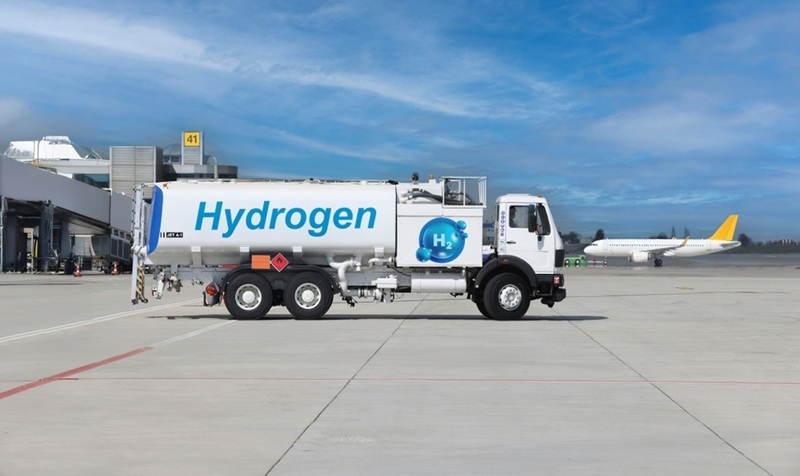
Most people hear “zero-emission vehicles” and immediately think of battery EVs. That makes sense for passenger cars because batteries have dominated the public conversation for years. Heavy-duty trucking is a different discussion. The demands are harsher, the routes are longer, payload matters more, and downtime can cost real money very quickly. That is exactly why Toyota continues to argue that hydrogen deserves a serious place in the future of commercial transport.
Toyota has not abandoned batteries, but it keeps pushing a multi-pathway strategy. In recent official announcements, the company has described hydrogen as an important energy source and has expanded its commercial-vehicle focus through new fuel-cell truck partnerships and projects. In March 2026, Toyota announced plans to join Daimler Truck and Volvo Group as an equal shareholder in cellcentric, a fuel-cell joint venture focused on heavy-duty applications. Then, in April 2026, Toyota and Isuzu announced joint development of a next-generation light-duty fuel-cell electric truck, aiming for production in fiscal year 2027.
That is why hydrogen trucks are not just a side experiment in Toyota’s world. The company is clearly treating them as a serious answer for commercial transport where batteries may not always be the cleanest practical fit.
Toyota’s current position becomes clearer when looking at what it says about real operating conditions. In the April 2026 Isuzu-Toyota announcement, the company pointed to delivery trucks that run long hours, cover long distances, and often need quick energy replenishment to stay useful. Toyota and Isuzu specifically said fuel-cell electric vehicles are an effective option for these high-utilization applications because, compared with BEVs, they can significantly reduce refueling time and offer long driving range per refueling.
That is the practical foundation behind Toyota’s argument. It is not saying batteries have no place. It is saying some work cycles punish long charging times and heavy battery packs more than others. This is where hydrogen vs electric vehicles becomes a logistics discussion, not just a technology debate.
The heavy-duty transport case usually comes down to a few points:
Toyota keeps returning to those conditions because that is where hydrogen has the strongest case.
A lot of hydrogen discussions stay theoretical. Toyota’s recent moves suggest it wants this conversation to become much more concrete. The company’s March 2026 announcement about joining cellcentric says the goal is to develop, produce, and commercialize fuel-cell systems for heavy-duty commercial vehicles and other heavy-duty applications. Toyota also said the partnership aims to strengthen fuel-cell competitiveness and help support hydrogen supply and infrastructure in the early stages.
That matters because Toyota hydrogen technology is no longer being framed only around passenger fuel-cell cars. The company is putting more emphasis on trucks, logistics, and transport infrastructure. In the Isuzu project, Toyota’s third-generation fuel-cell system is being integrated into a light-duty truck platform designed for demanding delivery operations. Toyota also said this next-generation system is intended to improve durability and extend service life, which are critical issues in commercial fleets.
This shift tells its own story. Toyota seems to believe hydrogen’s best chance to scale may be in commercial work first, not necessarily in ordinary consumer cars.
Fleet operators do not usually buy vehicles based on hype. They buy based on range, downtime, route requirements, maintenance expectations, and total cost over time. That is where the appeal of fuel cell trucks becomes easier to understand.
According to Toyota and Isuzu, commercial trucks often operate under high-utilization conditions where quick energy replenishment is essential. Their release says fuel-cell vehicles are well-suited to those environments because they reduce refueling time and provide long driving range. Toyota also highlighted reduced vibration, lower noise, and no CO2 emissions during use, putting fuel-cell trucks in the same zero-emission conversation as battery trucks but with a different operating profile.
For fleets, that translates into possible advantages such as:
This does not automatically make hydrogen the winner. It does explain why Toyota keeps treating it as more than a backup idea.
This part gets flattened too often. People sometimes talk as if there must be one universal winner between hydrogen and batteries. Toyota’s public statements suggest it does not see the market that way. In the cellcentric announcement, Daimler Truck, Volvo, and Toyota positioned hydrogen as one of the key energy sources to decarbonize transport, not the only one. Daimler Truck’s CEO also said hydrogen technology complements battery-electric drives in transport decarbonization.
That framing matters. The more realistic discussion is not “Which technology wins everything?” but “Which one fits this specific commercial job better?” That is the real heart of the hydrogen vs electric vehicles conversation in trucking.
Battery-electric trucks often make strong sense for shorter or more predictable routes. Hydrogen becomes more compelling when:
Toyota’s recent commercial strategy seems built around that distinction rather than around a simple anti-EV argument.
On a Similar Note: EV Charging Time: Factors & Tips that Car Owners Must Know
Hydrogen has a case, but it is not a simple one. Toyota itself acknowledges major challenges, especially cost and infrastructure. In the Isuzu-Toyota announcement, one of the identified barriers to wider FCEV adoption was high vehicle price. The companies said they are working to reduce cost through manufacturing changes, structural optimization, and fuel-cell design improvements. Toyota’s cellcentric announcement also made clear that hydrogen supply and infrastructure still need support in the early stages.
That means zero emission trucks powered by hydrogen are not just waiting for public opinion to catch up. They still need:
These are serious challenges, and pretending otherwise would make the case less credible. Toyota appears to know that, which is why it is collaborating rather than trying to build the whole hydrogen trucking future alone.
Toyota’s recent partnerships say almost as much as its technical claims. Joining forces with Daimler Truck, Volvo Group, and Isuzu suggests the company sees hydrogen trucking as too big and expensive to scale through isolated efforts. In the cellcentric deal, the three industrial players said cooperation is increasingly necessary to commercialize competitive fuel-cell systems for heavy-duty vehicles. Reuters also reported that the move is meant to share development costs while accelerating deployment of low-emission fuel-cell technologies for trucks.
This collaboration strategy is important for Toyota hydrogen technology because it reduces the impression that hydrogen is a lonely bet. Instead, Toyota is placing itself inside a broader commercial ecosystem that includes established truck manufacturers and fuel-cell specialists.
That gives the effort more weight for a few reasons:
In short, Toyota seems to be moving hydrogen trucking from a bold idea into a more industrial, cooperative phase.
Toyota’s case is strongest when it stays specific. It does not need hydrogen to outperform batteries in every transport segment. It only needs hydrogen to make better sense in some of the toughest ones. That appears to be the lane Toyota is choosing.
The Isuzu-Toyota project focuses on light-duty trucks used for deliveries with long operating hours and multiple daily stops. The cellcentric partnership is centered on heavy-duty on-road and off-road transport. Those are not random categories. They are the places where payload, utilization, and refueling speed can matter more than battery simplicity.
That is why fuel cell trucks remain relevant in the clean transport discussion. They do not need to replace every battery-electric truck. They only need to solve a set of problems battery systems may handle less elegantly in commercial use.
Read More: Car Technology Trends Shaping the Future of Driving Now
Toyota’s position seems less extreme than the headline version of the debate. It is not really saying EVs are wrong. It is saying commercial transport is too diverse for a one-answer future. For some passenger and short-haul use, batteries may dominate. For long-haul, high-utilization, or demanding fleet work, Toyota believes hydrogen deserves a stronger chance.
That is what makes the company’s push around hydrogen trucks worth watching. It is not only a technical argument. It is a strategic one backed by partnerships, next-generation fuel-cell development, and a clear focus on trucking rather than only consumer branding.
Whether Toyota proves right will depend on cost, infrastructure, durability, and adoption. But one thing is already clear: it is not treating hydrogen trucking as a side project anymore.
Both can be zero-emission at the tailpipe, which means neither produces CO2 during vehicle use in the same way as a diesel truck. Toyota and Isuzu specifically say fuel-cell electric vehicles emit no CO2 while in use. The bigger environmental comparison depends on how the electricity or hydrogen is produced upstream. That part matters a lot and can vary by region, energy mix, and supply chain. So the cleaner option in practice is not always decided by the truck alone.
Toyota’s recent public moves suggest it sees commercial transport as a stronger short-term use case for fuel cells. Its partnerships with Daimler Truck, Volvo Group, and Isuzu all point toward heavy-duty or high-utilization commercial applications. Toyota and Isuzu specifically highlighted long operating hours, long driving distances, and the need for quick refueling as reasons fuel-cell trucks may suit delivery and logistics work especially well. That operating profile gives hydrogen a more practical argument than it currently has in many passenger-car scenarios.
Cost and infrastructure still look like the two biggest barriers. Toyota and Isuzu said high vehicle price remains a challenge, and Toyota’s cellcentric announcement stressed the need to support hydrogen supply and infrastructure in the early stages. A truck can have strong technical advantages on paper, but it still needs affordable production and reliable fueling access to scale in the real world. That is why Toyota is leaning so heavily on partnerships instead of trying to solve the whole problem alone.
This content was created by AI