

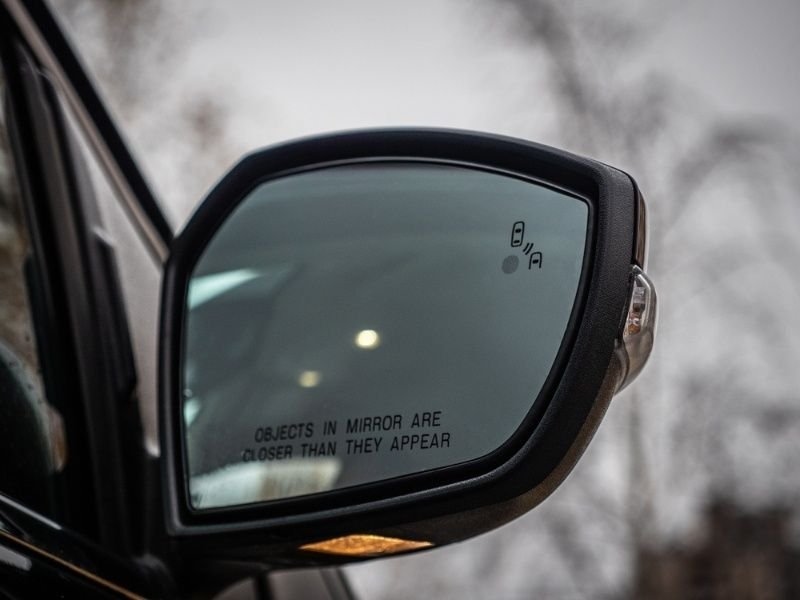
Glancing over your shoulder just doesn't cut it anymore. Today's cars are built with thicker safety frames that absolutely ruin rear visibility, making highway lane changes a total gamble if you only rely on glass mirrors. You need hardware watching your back. A solid blind spot monitoring system actively tracks the lanes beside you, catching fast-moving threats your eyes physically cannot see.
Must Read: Best Car Safety Features in 2026 for Safer Rides
The following list will explain how blind spot detection works:
The setup relies on high-frequency radar modules hidden just inside the corners of your rear bumper. These sensors constantly push electromagnetic waves outward and backward, scanning the exact areas your side mirrors completely miss. When a car slides into that space, the radar waves bounce back to the main computer, instantly calculating the approaching vehicle's speed, size, and exact distance.
The moment the processor confirms a car is sitting in your blind spot, it throws up a visual warning. You will usually see a bright amber or red LED light up right on the side mirror glass or inside the door frame. If you hit your turn signal while that warning light is on, the system gets loud. It blasts a sharp audio alarm to instantly pull your eyes off the dashboard and stop you from making a disastrous lane change.
A raw radar feed is useless if it constantly screams at you for driving past a guardrail. The software is engineered to strictly filter out static roadside infrastructure. It aggressively calculates the relative speed of the radar returns, ignoring parked cars, concrete barriers, and street signs. It only triggers the alert protocol when it detects a massive metallic object moving at a speed relative to your own trajectory, ensuring you are not overwhelmed by false positive data.
The industry constantly confuses passive alerts with active intervention. You must recognize the severe mechanical difference between blind spot assist vs. a blind spot monitor before you sign a financing contract or assume your vehicle will save you from a crash.
A standard monitor is strictly a notification tool. It identifies the lateral threat and flashes the LED warning light. That is the absolute end of its operational mandate. If you ignore the light, ignore the auditory alarm, and turn the steering wheel anyway, the passive system will let you crash into the adjacent vehicle. It relies entirely on the human operator to process the warning and manually abort the maneuver.
An assist system completely changes the dynamic. It does not just watch you make a catastrophic mistake; it actively fights you to prevent it. If you attempt to merge into an occupied lane, the system seizes control of the electronic power steering rack. It applies targeted braking to individual wheels and physically jerks the steering wheel back toward your original lane. It completely overrides human error in real-time, executing an evasive maneuver without waiting for your permission.
Upgrading from a passive monitor to an active assist protocol requires a drastically heavier, significantly more fragmented architecture. The vehicle must integrate the rear radar feed directly into the central steering, braking, and electronic stability control modules. This integration demands massive amounts of raw computing power and expensive hardware, which is why active assist is typically locked behind premium trim levels or expensive luxury technology packages.
Stop debating the financial merit of active safety technology. Is blind spot monitoring worth it? The answer is an absolute, non-negotiable yes. You have to look at the brutal mathematics of a highway collision. A minor side-swipe at high speeds can instantly total your vehicle, trigger massive medical bills, and cause your insurance premiums to skyrocket for the next five years. The upfront cost of adding this system—usually a few hundred dollars bundled into a broader safety package—is statistically insignificant compared to the financial devastation of a single at-fault collision.
Beyond the raw financial metrics, this technology drastically reduces operator fatigue. When you are executing a brutal five-hour road trip or navigating chaotic, multi-lane urban traffic, the mental strain of constantly checking your flanks is exhausting.
Top Pick: Why Lane Departure Warning System Matters in New Cars

You cannot just buy a random vehicle and assume the technology operates flawlessly. The execution varies wildly. When targeting the best cars with blind spot monitoring, you must identify the vehicles that integrate this critical system perfectly.
It sets the absolute benchmark for this technology. It does not just flash a basic warning light. It utilizes high-definition augmented reality displays and active steering intervention that feels incredibly smooth rather than a jarring mechanical jerk. Its radar arrays are highly sensitive, tracking vehicles multiple car lengths back to predict aggressive lane cutters before they enter the blind zone.
This model completely disrupts the market by adding a massive visual component to its safety suite. Activating the turn signal instantly overrides the digital instrument cluster, displaying a live, high-definition camera feed of the entire blind zone directly in front of the steering wheel. The driver does not even have to turn their head to confirm the lane is clear.
It shares this exact same brilliant, highly tactical deployment of existing camera hardware. It provides the very same live visual feed, ensuring maximum operational awareness during high-speed highway lane changes.
The era of driving blind is completely dead. If you want to survive modern highway infrastructure and protect your massive financial investment, you must treat your vehicle purchase like a highly tactical, heavily monitored deployment. You cannot afford to be vague about your safety requirements or cheap out on critical radar technology when negotiating at the dealership.
Yes, intense environmental factors routinely disrupt these sensors. Heavy snowfall, torrential rain, or thick mud caked directly over the rear bumper can physically block the electromagnetic radar waves.
Standard factory setups are instantly blinded when a trailer is attached, as the radar simply bounces off the front of the towed unit. Most vehicles will automatically shut the blind spot monitoring system down the moment a trailer wiring harness is connected.
Because the radar modules are mounted directly behind the fragile plastic of the rear bumper, even minor parking lot fender benders can destroy the hardware. Replacing a single sensor for a blind spot monitoring system typically ranges from $800 to $1,500. This massive cost includes the price of the OEM radar module, the physical installation, and the mandatory digital recalibration process required to align the sensor with the vehicle's central computer.
This content was created by AI